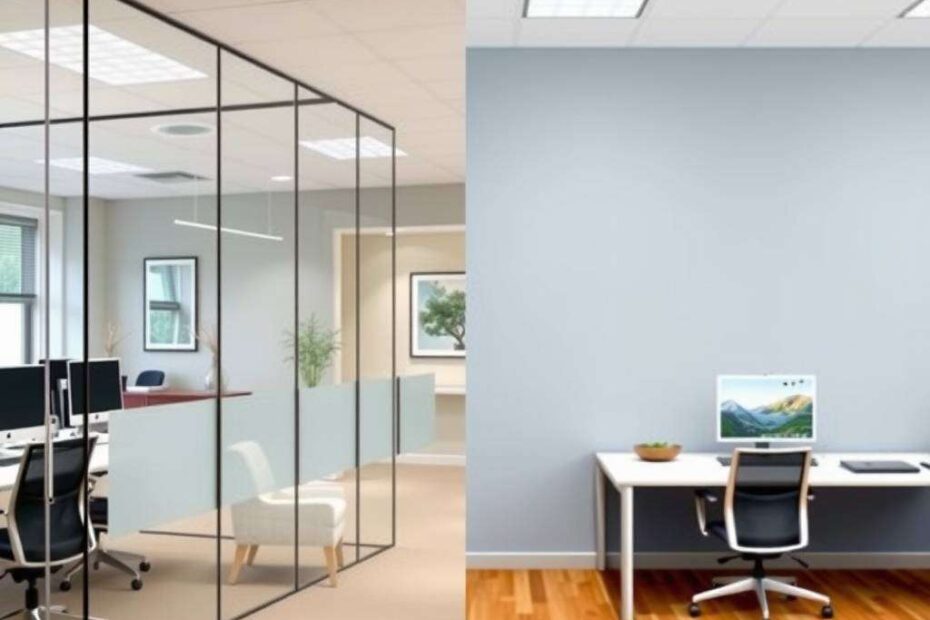
In recent years, office design has undergone a significant transformation, with many companies choosing to create more open, collaborative spaces. A key trend in this redesign is the use of glass partitions, which present an alternative to traditional walls. Glass office partitions not only enhance the aesthetic appeal of an office but also promote a more flexible working environment. This article aims to shed light on the advantages and disadvantages of glass partitions versus traditional walls, helping business owners make informed decisions about their office interiors.
The choice between glass and traditional walls can significantly impact the functionality, atmosphere, and overall productivity of an office space. As businesses strive to adapt to modern work requirements, understanding the benefits and limitations of each option is essential. This article will delve into the features of glass partitions, the benefits of traditional walls, and how these elements can affect organisational culture and teamwork.
Glass partitions are an innovative solution for modern workspaces, offering a sleek and professional aesthetic while maximizing natural light. These versatile dividers create an airy feel and can be customized to fit any office layout or style. With the ability to enhance productivity and collaboration, glass partitions are becoming increasingly popular among businesses. For more information on high-quality options, visit https://www.urbansquare.net/.
The Advantages of Glass Partitions
Glass partition office design has rapidly gained popularity for a myriad of reasons. First and foremost, one of the standout features of glass walls in office environments is their ability to create a sense of openness. Unlike traditional walls, which can make a workspace feel restrictive and confining, glass partitions allow natural light to flow freely throughout the area. This not only enhances the ambience but also contributes to the well-being of employees by improving mood and reducing feelings of isolation.
Moreover, glass office walls and doors facilitate communication and collaboration among teams. This transparency encourages a culture of openness, where employees are more likely to engage with one another, share ideas, and foster innovation. For businesses that prioritise teamwork and collaboration, implementing internal glass partitions can significantly elevate the workplace dynamic.
Another advantage of glass partitions is their adaptability. Should your business needs change, the flexibility of glass office partitions allows for quick reconfigurations of the workspace without extensive renovations. This is in stark contrast to traditional walls, which can be time-consuming and costly to alter. With modular glass wall systems available, businesses can easily modify the layout to match evolving needs, thus utilising space more efficiently.
The Case for Traditional Walls
Despite the many advantages associated with glass office interiors, traditional walls still hold their ground in the discussion on office spaces. One of the most significant benefits of traditional walls is their sound insulation properties. Unlike glass partitions, which can create a more open atmosphere but also permit noise to travel, traditional walls provide a degree of privacy that can enhance focus and concentration. This can be particularly beneficial in environments with teams that require deep work or individual concentration.
Another aspect to consider is the cost factor. While initial investments in glass partitions may seem promising due to their aesthetic appeal, the long-term maintenance costs could add up. For instance, glass can be prone to scratches, requiring regular cleaning to maintain its pristine look. In contrast, traditional walls typically require less upkeep, making them potentially more cost-effective in the long run.
Furthermore, traditional walls allow for more extensive personalisation options. Businesses can choose from various materials, textures, and colours to create environments that reflect their brand identity and cultural values. This flexibility is not as readily available with glass, as it tends to have a more uniform look. For businesses that value unique interior design, traditional walls may provide additional creative opportunities.
Creating a Balanced Office Space
In the debate between glass partitions and traditional walls, it is crucial to consider the specific needs of your business. A hybrid approach could offer the best of both worlds. By incorporating glass office walls and doors where collaboration is essential, and opting for traditional walls in areas that require quiet and privacy, businesses can create a balanced office space tailored to their requirements.
Additionally, the layout of your office can impact the overall business strategy. For companies striving for innovation, a predominantly glass partition office design may facilitate an atmosphere conducive to collaboration. Conversely, firms focusing on data processing, consultancy, or areas requiring confidentiality might benefit more from traditional walls to create designated quiet spaces.
Ultimately, the choice between glass partitions and traditional walls comes down to the unique culture and operational needs of your business. Understanding the benefits and limitations of each option will empower you to design a workspace that not only enhances productivity but also reflects your organisational values.